What makes a Ribbon Blender Sanitary?
Ribbon blenders can be designed for sanitary food, pet food, cosmetic, API (active pharmaceutical ingredients) and any blending application that required good cleanability including colorants, catalysts, detergents, air freshener, potpourri, and even dry industrial cleaning chemicals.

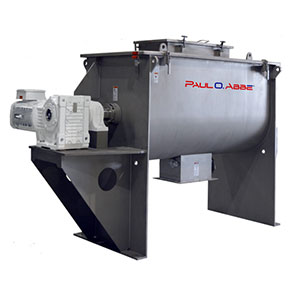
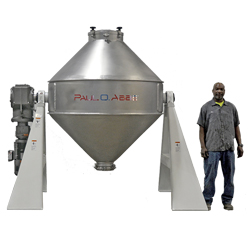
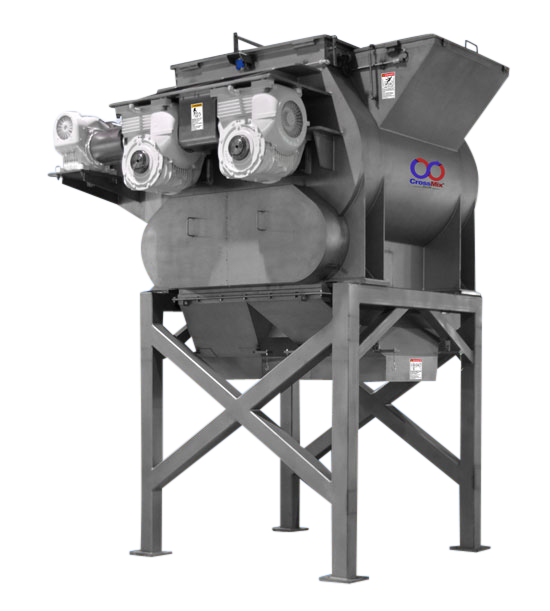
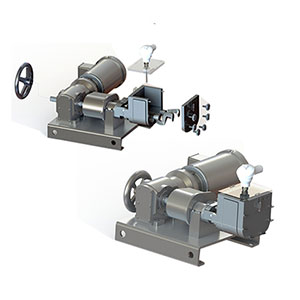
Sanitary ribbon blender design requirements include stainless steel product contact parts, surface finish of at least #4 polish, 180 grit, or 32Ra. All welds must be ground smooth, flush and pit free, shaft seals must be air or liquid purge and easily disassembled for cleaning. To be a sanitary ribbon blender the top cover must be designed to fully open with no hidden or overhanging areas that cannot be directly viewed by the operator. The discharge valve of a sanitary ribbon blender should be simple, accessible and viewable from the top and from under the blender and should be easily disassembled.
External features of a sanitary ribbon blender include all surface to be made of stainless steel, polished to at least a 120 grit or virgin glass bead blasted, A simple direct drive without belts or chains and, therefore, no guards which are not easily cleaned and can harbor dirt and spores.
Sanitary ribbon blenders should be installed at least 3 feet from any wall to allow access for inspection.
What Industries can use a Sanitary Ribbon Blender
A sanitary ribbon blender is used in industries that require the blending of powders, granules, or other dry materials while maintaining strict hygiene standards. These industries include:
- Pharmaceuticals: For mixing ingredients for tablets, powders, or granules. The sanitary design ensures compliance with Good Manufacturing Practices (GMP).
- Food and Beverage: To blend ingredients like powdered flavorings, spices, or dry mixes for soups, sauces, and bakery products, all while ensuring sanitation to prevent contamination.
- Cosmetics and Personal Care: For mixing powders, pigments, and other ingredients used in makeup, lotions, and creams.
- Chemical Processing: For blending chemicals, pigments, or other dry materials used in the manufacturing of paints, coatings, or cleaning products.
- Nutraceuticals: Similar to pharmaceuticals, but for dietary supplements like protein powders, vitamins, or other health-related products.
- Agriculture and Animal Feed: For mixing ingredients like powdered additives, vitamins, minerals, and other dry materials used in animal feed production.